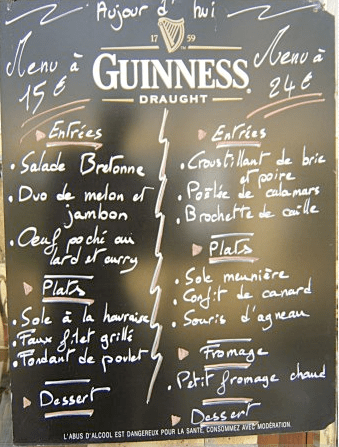
The excerpt below is from a Baltimore Sun blog “Consuming Interest” on how and why some items are placed in certain spots on a menu. Basically, our eyes rest at certain points, the human desire to not seem “too cheap” to fellow diners are consuming truths and restaurants build their physical menu accordingly.
My question for you, gentle reader, is this – how can you apply this knowledge of consumer behavior in other places, more appropriate ones for your business or brand? What in your arsenal is the service or product that should be priced as the second-most-expensive glass of wine?
It should come to no surprise that restaurant owners adjust their menus to increase check totals overall and to promote the items that bring in the most profit. We told you earlier today that when there were no dollar signs on the menu, customers spent more.
As Dave Pasegic of the Restaurant Resource Group notes, a menu …
“is the only piece of printed advertising that you are virtually 100 percent sure will be read by the guest. Once placed in the guest’s hand, it can directly influence not only what they will order, but ultimately how much they will spend.”
And the strategies used to promote high-profit items are very intriguing.
People don’t read menus from top to bottom — or at least, their gaze doesn’t necessarily linger at the top. For example ….
… the National Restaurant Association recommends that chefs place the dishes they want to sell on the center of the inside right page of their menu.

 Born Curious
Recent Comments