From the Wall Street Journal:
The worst declines for Swiss watches are in the U.S., where sales fell 42% in May from a year earlier, according to the Swiss Watch Federation. The slowdown is visible at watch-collecting events. A lavishly catered party in Los Angeles for Breitling, another watch maker, recently drew fans who dined and sipped champagne, but the table displaying Breitling’s latest models was the loneliest in the place. Breitling, too, is getting creative, experimenting with holding sales events to which wives aren’t invited. “We’re finding they buy more when their wives aren’t there,” says Marie Bodman, chief executive of Breitling USA.
These days, at least 60% of customers enter high-end watch boutiques to service their own watches rather than to buy new ones, says Mr. Brücker, who coaches salespeople to lavish attention on these mostly disgruntled clients in order to rebuild their loyalty.
So how does one sell luxury in these times? Sales techniques of that coach include:
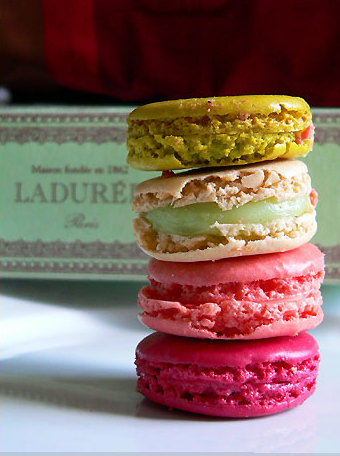
Mr. Brücker urged his students to say “value” rather than “price” and to sell “romance” rather than “products.” He used PowerPoint to impart what he calls the “macaroon technique,” referring to the sandwich-like French macaron pastry. This can be applied to most any product and goes something like this: “Madam, this timepiece (or diamond or handbag) comes from our finest workshop and it has a value of $10,000. If you buy it, your children are sure to enjoy it for generations to come.”
That pesky number is sandwiched between the product’s more romantic benefits. “We sell luxury—it’s an emotion,” Mr. Brücker instructed.
Flattery sells, so to further those positive emotions, he insists that sales associates compliment the customer’s own watch, even if it’s from a competitor.
But don’t expect to bargain with his clients. He coaches them to offer a gift if a discount is requested. “The minute you leave the boutique, you forget” the discount, he said. A closet in IWC’s boutique is filled with coffee mugs, umbrellas, watch-winding devices and the like.
His methods dictate that salespeople lay the client’s well-worn watch on a tray between two shiny new ones, creating a contrast that subtly suggests it’s time to upgrade.
Because guilt over spending is playing a big role in the sales downturn, he teaches salespeople to suggest a “sorry gift”—of another timepiece—for a wife who might be disappointed that her husband just dropped a sizable sum on his own wrist.

 Born Curious
Recent Comments