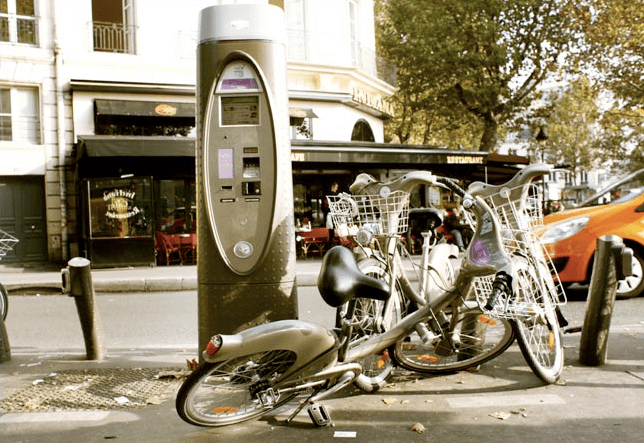
Vélib’, Paris’s bicycle-rental system, has been touted as an inspirational model for New York and other cities around the world. Residents there can rent a sturdy bicycle from hundreds of public stations and pedal to their destination, an inexpensive, healthy, and low-carbon alternative to hopping in a car or bus. But all is not rainbows and unicorns in the land of Velib’.
First the good numbers:
Daily usage averages 50,000 to 150,000 trips, depending on the season, and they have proven a hit with tourists, who help power the local economy.
With more than 63 million rentals since the program was launched in the summer of 2007, the Vélib’ has established itself as part of Parisian life, and has been extended to provide 4,000 Velib’s in 29 smaller towns on the city’s edges.
And now, the not so good ones:
Many of the custom-made bikes, which cost $3,500 each, are showing up on black markets in eastern Europe and northern Africa. Many others are being spirited away for urban joy rides, then ditched by roadsides, their wheels bent and tires stripped.
“We miscalculated the damage and the theft,” said Albert Asséraf, director of strategy, research and marketing at JCDecaux, the outdoor-advertising company that is a major funder and organizer of the project. “But we had no reference point in the world for this kind of initiative.”
At least 8,000 bikes have been stolen and 8,000 damaged so badly that they had to be replaced — nearly 80 percent of the initial stock, Mr. Asséraf said.
JCDecaux must repair some 1,500 bicycles a day, which absorbs the efforts of 400 fulltime staff members. The company maintains 10 repair shops and a workshop on a boat that moves up and down the Seine.
Despite the increasing costs, the city and JCDecaux are pressing on:
The company invested about $140 million to set up the Vélib’ system and provides a yearly fee of about $5.5 million to Paris, which also receives rental fees for the bikes. In return, its 10-year contract allows it to put up 1,628 billboards that it can rent.

 Born Curious
Recent Comments