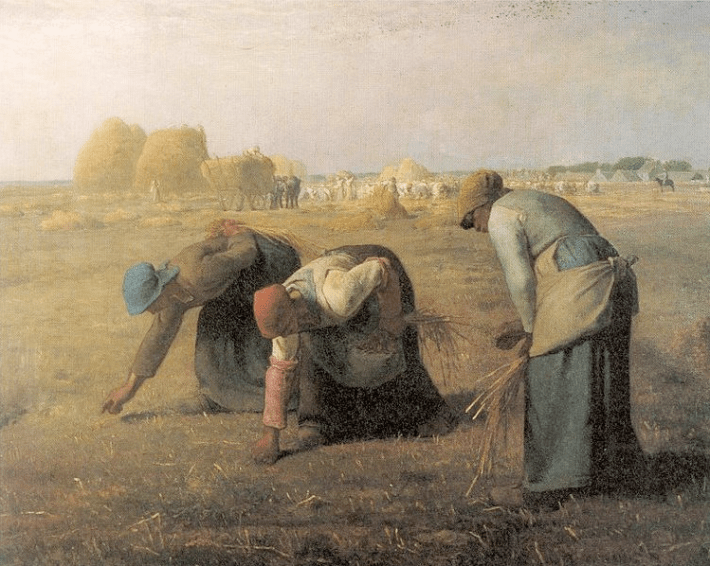
Gleaning – harvesting leftover crops for the poor – is an idea as old as the Bible. Leviticus urges farmers to leave the corners of their fields unharvested, providing food for the poor and strangers. The practice was common in 19th-century France, as well.
But gleaning is also finding modern advocates in the United States as the recession eats a hole in many family budgets.
“This idea of rescuing food that’s going to go to waste makes an awful lot of sense to people,” says Teresa Snow, program director of agricultural resources at the Vermont Foodbank in South Barre. Gleaning, she says, is growing in popularity “not only across Vermont but across the nation” as hard times are “forcing people to be creative.”
A 2004 report from the University of Arizona in Tucson estimates that 40 to 50 percent of all the food that could be harvested from fields will never be eaten.
Gleaning often means harvesting what a farmer can’t sell, such as produce that has a bruise or mark on it. Sometimes the vegetable may be the wrong size (too large or small) or the wrong shape. Other times, farmers simply overplant and don’t have time to harvest it all. Another form of gleaning involves hauling away leftover produce from a farmers’ market at the end of the day.

 Born Curious
Recent Comments